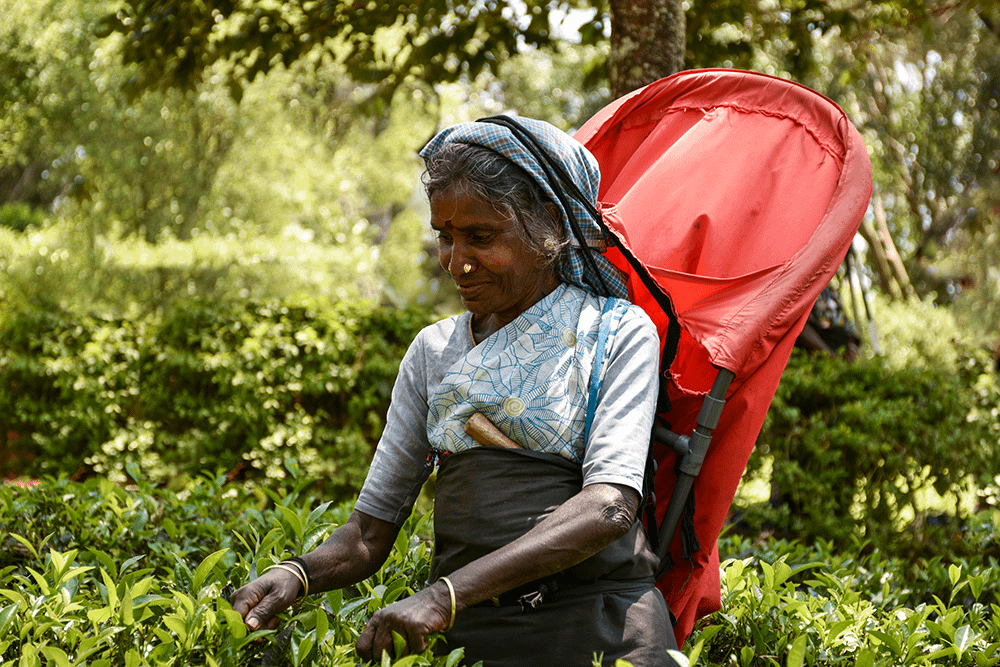
As of 10 September 2024, the Sri Lanka Wages Board issued an extraordinary Gazette raising the minimum daily wage by 35% for tea and rubber estate workers. ETP applauds this significant progress towards achieving a living wage for workers and the decisive action taken by the Wages Board to increase wages.
The actions of the Wages Board in Sri Lanka serve as an example of how debates to define and contextualise a living wage should not overshadow progress and prevent basic wage increases. This is a clear case of action over talk, and ETP encourages Sri Lanka’s tea producing peers to follow suite.
In Sri Lanka, the minimum daily wage for tea has been raised to Rs 1,350 (approximately USD 4.5) per day, effective from 10 September 2024 for the next three years. We are keen to understand how national inflation rates will be factored into this increase across the three years. This month’s increase keeps tea and rubber as the highest-paid sectors in Sri Lanka, compared to a national minimum wage of approximately Rs 1,050 (USD 3.5) per day set in March 2023.
This is the same basic wage that was Gazetted earlier this year but was withdrawn following a Supreme Court suspension order. The new Gazette maps out a realistic productivity incentive for workers, allowing them to earn an additional Rs 50 per kilo of tea plucked above the norm – with no upper limit to earnings.
The “norm” refers to the typical amount of tea plucked on an estate, varying between 12-20 kg a day depending on estate and weather conditions. ETP is encouraged that workers are incentivised through a meaningful bonus, though given the global oversupply of tea we would also welcome a focus on quality.
It is important to recognise that this wage increase does not solve all; we know that more work needs to be done to achieve a living wage. That said, we cannot ignore the positive and decisive steps taken by the Sri Lanka Wages Board. This increase marks a significant improvement for workers and is a hard-won achievement through negotiations between government, tea estate owners, and Unions.
Globally, tea workers often face poverty and struggle to meet basic needs for themselves and their families. Complex factors such as the low price of tea, rising production costs, and certain business practices contribute to these challenges.
ETP believes that increased transparency and shared responsibility across the tea industry can create conditions for tea workers to have decent livelihoods. Read our position paper to find out more about the obstacles the industry faces when trying to achieve a living wage, and our approach to driving change in this area.
ETP urges other tea-producing countries to take the lead from the example set by the Sri Lanka Wages Board and act now to ensure that tea workers receive a pay that reflects the true value of their labour.