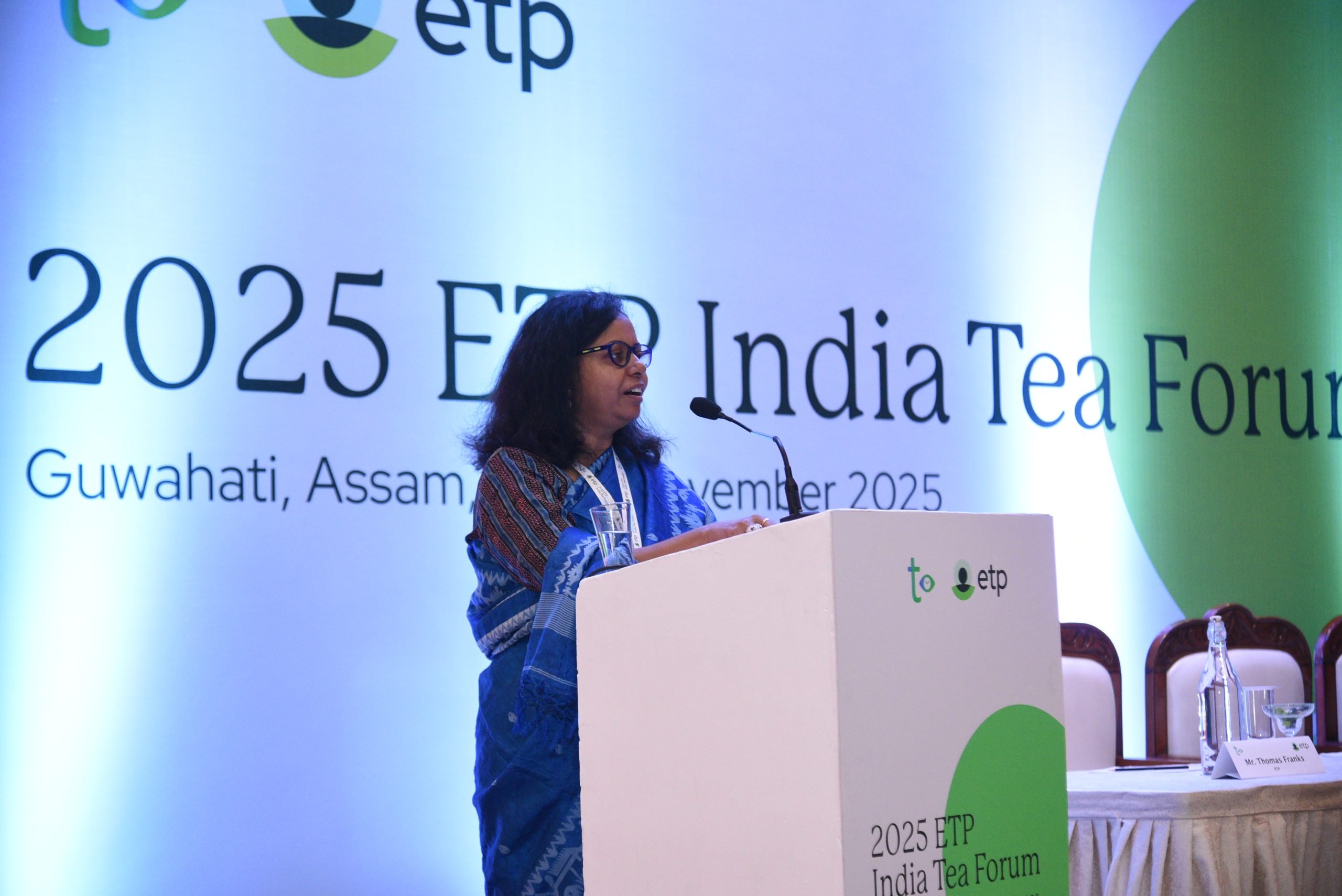
On 20 and 21 November in Guwahati, Assam, as I stood welcoming 100+ participants to the ETP India Tea Forum 2025 in collaboration with Tea Vision Trust, I felt something profound shifting – not just in the conversations taking place, but in the energy in the room. The Indian tea sector is at a pivotal moment, and for two days, we witnessed what meaningful collaboration can look like when diverse voices are heard with respect and intent.
For me, the most powerful aspect of the Forum was not the scale or structure, but who we brought together on one platform – industry leaders, small growers, community representatives, global packers, certifiers, researchers, and, most importantly, workers and women from the estates who carry this industry on their shoulders every single day.
This gathering was designed not only to share knowledge, but also to explore questions that are sometimes overlooked and to consider ideas that could support the sector’s continued development.
A sector in transition
Opening the Forum, Tom Franks, Chair of ETP’s Board, set the tone with clarity and conviction. “The issues we are discussing are not theoretical – they are real challenges on the ground. We must recognise them honestly if we are to move forward together.” The future of the Indian tea sector will depend on finding practical, balanced approaches that support long-term sustainability for all involved.
The Indian government’s push for the National Guidelines for Responsible Business Conduct (NGRBC) and the BRSR report framework has created an inflection point. As Shankar Venkateswaran, responsible business expert, said in his keynote, “Responsible business conduct is no longer an optional agenda, it is business mainstream. If we wait for disasters to force accountability, we will be too late.”
And so began a courageous sector-wide conversation: Can we build a harmonised data and disclosure framework grounded in Indian realities, that simplifies reporting, supports producers, and strengthens trust between buyers and estates?
The answer from the room was a resounding yes.
Fair pricing and equitable value
Perhaps the most candid discussions of the Forum centred on tea pricing, a topic often spoken about behind closed doors. On stage, buyers, producers, worker representatives, and civil society asked the question: Is it possible to move towards a more equitable distribution of value across the supply chain?
Shaibal Dutt, CEO of Goodricke, reminded us in his opening presentation that sustainability cannot operate on goodwill alone: “Sustainability must be a shared responsibility. Producers cannot carry the cost alone, while the market rewards cheap tea.”
Paban Singh Ghatowar, President of Assam Chah Mazdoor Sangha, voiced what many in the room felt deeply: “The worker is the backbone of this industry. Fair wages should not be a debate – it should be a commitment we all share.”
The group discussions that followed were constructive and solution-focused, exploring a range of approaches that could help better reflect factors such as quality, climate risk, and worker welfare within pricing structures. A key takeaway was the shared interest in continuing to examine models that support responsible production and contribute to a more resilient sector.
Certification: is there a constructive way forward?
One of the key panels focused on certification and due diligence, where stakeholders recognised the role certification has played in supporting improvements in the tea sector, while also acknowledging practical challenges related to complexity, compliance, and market incentives.
The conversation moved away from blame and towards clarity. A memorable moment came when a producer asked: “If certified tea sells for the same price as non-certified tea, what is the incentive for us to invest?”
Another participant asked how certification frameworks might better reflect the perspectives of workers, who are central to the sector.
There was broad acknowledgement that, while certification has helped raise standards, there is scope for it to adapt further – by becoming more flexible, clearer in its expectations, better aligned with local contexts, and ultimately more supportive of producers and workers. The focus was on how certification can continue to be a constructive tool for improvement.
Climate change – a crisis beyond debate
There was unanimous agreement on one point: climate change is no longer a future risk, it is the lived reality of the sector today. Temperatures crossing 40°C, unpredictable rainfall, rising disease pressure, soil degradation, water scarcity – all are impacting productivity, livelihoods, and the future of tea.
Joydeep Phukan, Secretary of Tea Research Association, issued a wake-up call: “Climate science has confirmed what we feared. We need climate-resilient clones, soil regeneration, water management, and diversified ecological approaches. The pace of adaptation must accelerate.”
We heard inspiring examples – from AI-enabled clone development to low-carbon agroforestry, from integrated pest management to tech-enabled water surveillance. What stood out was not the technology, but the belief that collaboration is the only path to resilience.
As one participant said, “climate action is not a cost. It is the price of survival.”
Workers, women, and youth: the heart of the sector
On Day 2, Andy Brown, Managing Director of Taylors of Harrogate and Chair of the Collaborative CEO, shared reflections from his recent visits to tea communities in Assam. He reminded us that transformation is visible and real when communities take ownership.
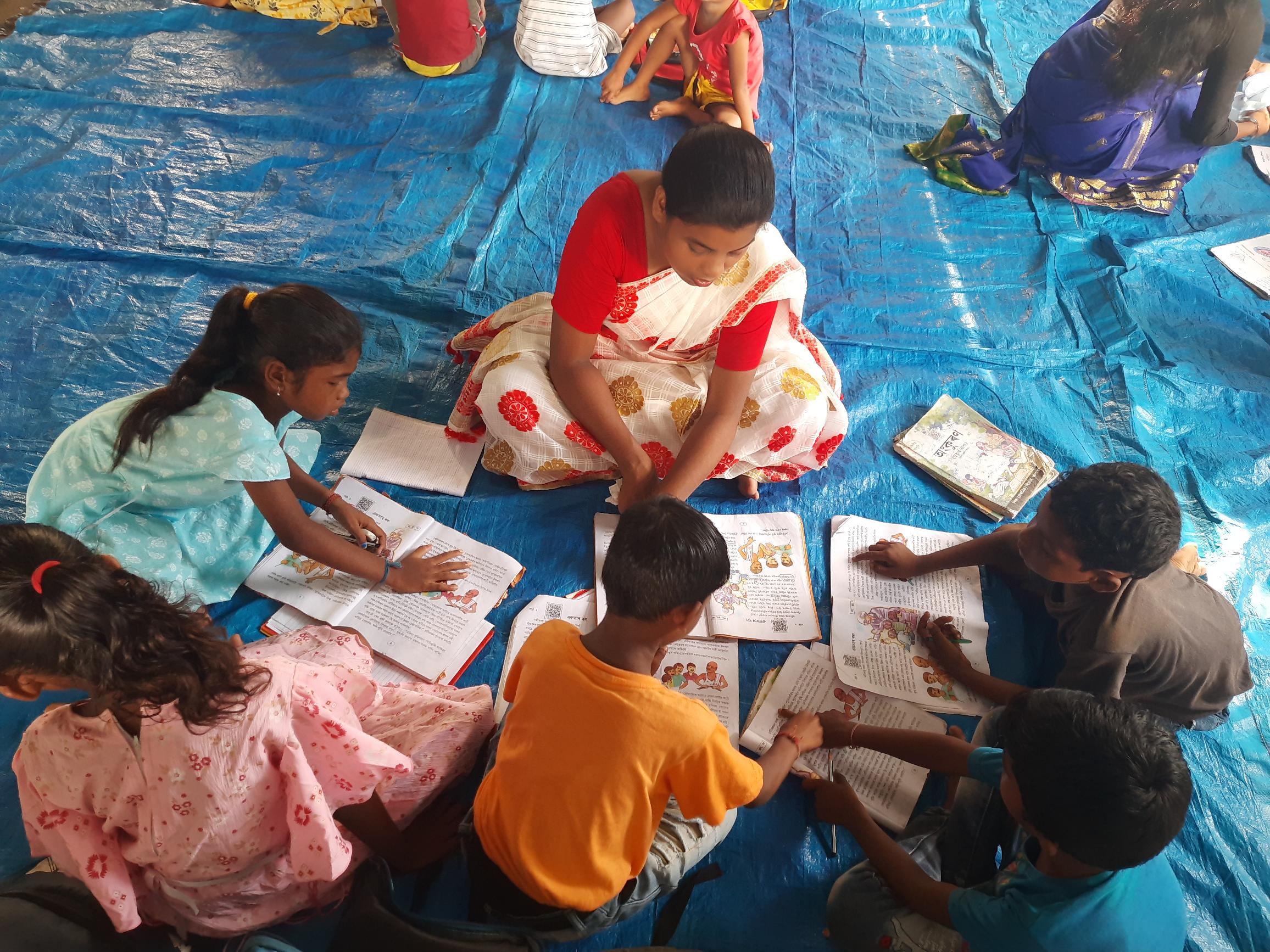
What followed was one of the most powerful conversations of the Forum, as we heard directly from women leaders, youth mentors, and Community Development Forum representatives from ETP’s Plantation Community Empowerment Programme (PCEP) and Women in Leadership (WiL) initiative. Their confidence, courage, and clarity left the audience moved and inspired.
Suneel Singh Sikand, CEO of Rossell Tea, captured it best when he said: “It is the workers who run the industry. Without investing in their voice, welfare, and dignity, there is no sustainable future for tea.”
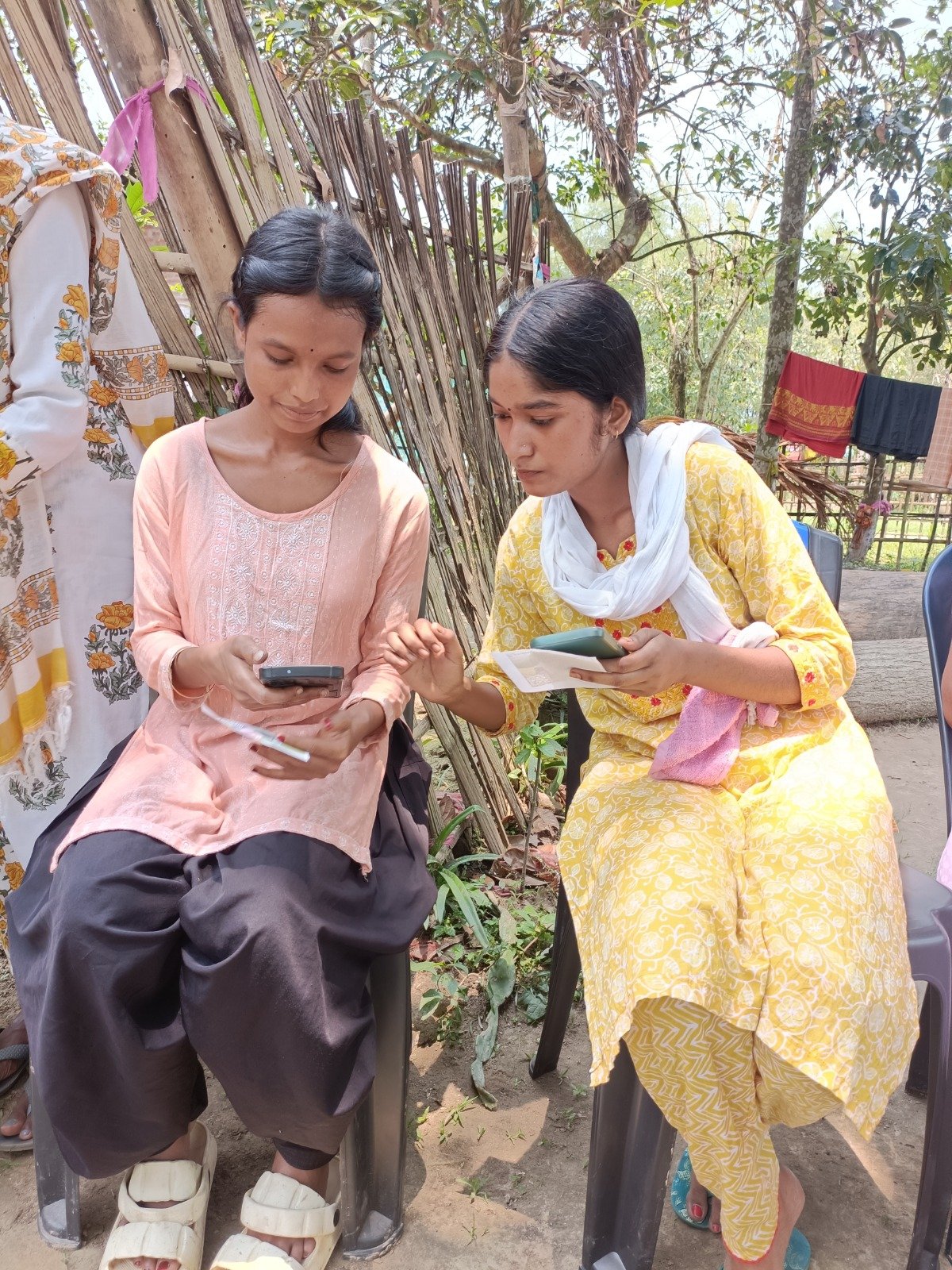
Hearing Hemonti, Mamoni, and Gouranga from Assam’s tea estates, speak so powerfully about transforming communities through leadership, education, safety, and livelihood diversification reminded us why community-led models work. And this year, we also showcased how digital innovation is emerging as a vital driver of community empowerment – demonstrated through the Unnatea mobile platform, a simple yet transformative tool enabling workers to access government schemes and services with dignity and independence.
What began as programmes are now becoming systems of empowerment – where voice, technology, and local leadership come together to build resilience and agency from within.
Small Tea Growers: from margin to mainstream
For the first time, the ETP Forum included a dedicated session for Small Tea Growers (STGs), who now contribute an estimated 50–60% of India’s total tea production. Their participation provided valuable insight into the opportunities and pressures facing this segment of the sector.
Discussions reflected the challenges associated with price volatility and rising input costs. As one grower noted: “We cannot continue at this price. If this continues, we will uproot tea and move to other crops.”
The session highlighted the importance of ensuring that the perspectives of smaller producers are considered in wider sector dialogue, alongside those of larger industry stakeholders.
Where do we go from here?
The Forum ended not with answers, but with aligned intent:
- Greater transparency and simpler processes
- Working together rather than in isolation
- Fairer distribution of value across the supply chain
- Ensuring workers and communities are included meaningfully in sector discussions
There was a shared sense that the sector now needs to move from discussion to practical action, and to look at how smaller initiatives could be expanded in a more coordinated way.
I left the Forum with hope. Not because the challenges suddenly became smaller, but because the willingness to solve them became stronger. Collaboration is the only path ahead and I believe deeply that tea can become an industry defined not by struggle, but by dignity, fairness, innovation, and collective progress.
Here’s to turning words into action, and action into impact.
Find out more