January, 2025

Bringing together community in Assam: Community Development Forums

Explaining the essential tea estate institutions rooted in our Plantation Community Empowerment Programme (PCEP).
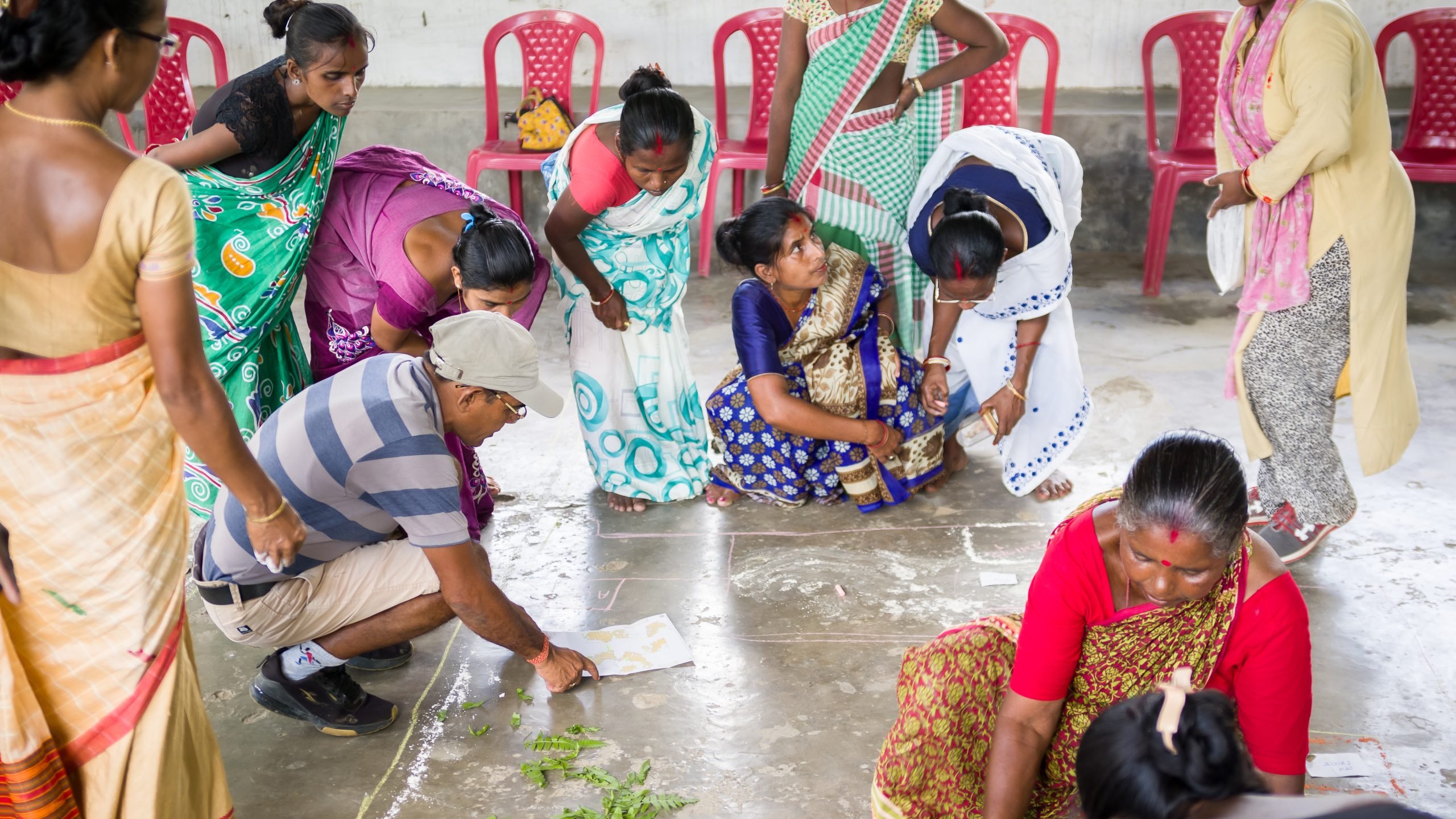
Drawing out the plan of the Estate for the Resource Mapping exercise, Moran Tea Estate CDF, Assam.

The Community Development Forum (CDF) is a tea estate level institution, present across the 23 tea gardens in Assam where ETP’s Plantation Community Empowerment Programme (PCEP) is active. Each CDF has a membership of 30 to 40 people, and totals 600 to 700 members.

The CDF serves as the cornerstone of PCEP, bringing together tea estate management and the community for collaborative decision-making. Led by the Tea Estate Manager as President, it includes representatives from permanent and temporary workers, women from Self-Help Groups, young people, and the elderly.

Each autonomous CDF has subcommittees on WASH, women empowerment, child protection, education, health, youth development, and social security. Currently, CDFs are charting Estate Development Plans (EDPs) to address key issues such as worker absenteeism, youth substance abuse, school dropouts, social protection, and economic activities for women’s Self-Help Groups.

Dipankar Tanti, member of the youth group, Behora Tea Estate CDF, Assam.

This unique multi-stakeholder model fosters collective action by uniting management and tea estate communities through a shared platform to identify and address issues collaboratively. The initiative strengthens community engagement and promotes ownership, enabling diverse voices to shape solutions. During the PCEP mid-term evaluation, tea estate management and CDF Secretaries highlighted its novelty as the first platform fostering inclusive participation within tea estates. 

On 18th June 2024, the Dejoo Tea Estate Community Development Forum (CDF) organised an awareness and facilitation program on the Sukanya Samriddhi Yojana* at the estate’s lower primary school. More than 30 community members participated, with the opening of events being facilitated by the Postmaster of Goruni Post Office;

(* The Sukanya Samriddhi Yojana (SSY) is a government-backed savings scheme in India that helps parents save for their daughter’s education.)

“In the past, when we visited garden areas for similar programs, participation was often low, and we had to wait long periods for attendees. However, this event is well-organised, allowing us to successfully open accounts for the girls. The Dejoo Tea Estate CDF’s is commendable and vital for the welfare of the garden community.”

23 girls opened savings accounts following the event.  

Over 2023-24, ETP trained CDF members in participatory methods, leadership, institution building, and developing vision, mission, and strategies, with the intention to establish CDFs as sustainable, community-based structures able to succeed post ETP intervention. The next step is to support them in becoming formally registered independent entities, enabling their self-sufficiency in being able to raise resources for the welfare of tea estate communities.  

Jinita Das Digal – President of Pengera Gain Panchayat, member of Borbam Tea Estate CDF, Assam.

There have been many learnings while implementing PCEP and building the CDFs, for instance:

  • The proper selection of CDF members is foundational, as involvement requires a high-level commitment, necessitating time and dedicated headspace.
  • Strong leadership from the CDF Secretary plays a pivotal role in executing activities – as a community-nominated leader, the Secretary ensures ownership and accountability.
  • Continuous capacity-building support from the ETP PCEP team has been vital in aiding the first experience of leading a multi-stakeholder forum.
  • Mobilising active youth engagement is core to the strength the CDF, as student unions serve as influential stakeholders. Strategies discussed include engaging youth through sports and other initiatives to boost participation and impact. 

Overall, CDFs in tea estates serve as vital multi-stakeholder platforms that empower workers, management, and community members to collaboratively address key issues and drive sustainable development. Their structured approach ensures long-term community welfare through participatory decision-making and strategic initiatives.  

Ms Monumoti Kalindi, CDF Secretary at the Moran Tea Estate, summarises:

“The CDF serve as a platform where all [tea] garden stakeholders, including workers and management, can collaborate on various community development issues.”

The PCEP is nearing the end of phase II implementation, but following the continued success of measures such as CDFs, we are looking to expand the programme into it’s third delivery. If your organisation would like to be a part of creating the impact this delivers for tea workers, their families, and communities, please contact our India Country Manager Ranjana Das for more details on how to get involved: Ranjana.Das@etp-global.org